DonateMembershipVisit Heritage
  • Tūrangawaewae
    Places
  • Tira Māori
    Māori Heritage
  • Poutairangahia
    Archaeology
  • Rauemi
    Resources
  • Mō Tātou
    About Us
  • New Zealand Heritage List
  • Nominate and submit
  • Explore the List
  • National Historic Landmarks
  • Plaques
  • Rainbow List Project
  • Lost heritage
  • Visit Heritage
  • Our properties
  • Turnbull House Project
  • Collections
  • Shop
  • Tohu Whenua
  • Tira Māori
  • Conserving Māori heritage
  • Marae built heritage
  • Māori heritage on the List
  • Hinemihi—Te Hokinga Mai
  • What is archaeology?
  • Is there a site on my property?
  • What are my legal requirements?
  • Affecting an archaeological site
  • Declaring an archaeological site
  • Archaeology FAQs
  • Archaeology Digital Library
  • Archaeology guidelines and templates
  • Resources
  • Funding
  • Publications
  • Sustainable management guides
  • Disaster recovery
  • Podcasts & digital resources
  • Education Hub
  • Conservation plans
  • About
  • Board
  • Māori Heritage Council
  • Senior Staff
  • Offices
  • Contact us
  • Careers
  • Covenants
  • Fast-track
  • Corporate documents
  • Currently consulting on
  • Our submissions
  • News
  • Covid-19 response
Quick links
Rārangi Kōrero | The List
Explore the List
National Historic Landmarks
Ngā Manawhenua o Aotearoa me ōna Kōrero Tūturu
Quick links
Tapuwae
A Vision for Places of Māori Heritage
Funding for Māori Heritage
Resources
Quick links
Archaeological Authority Portal
Applying for an archaeological authority
Archaeology FAQs
Browse the most frequently asked questions about archaeological authorities and the archaeological process.
Quick links
Quick links
News
News Keep up to date with Heritage New Zealand Pouhere Taonga
Membership
Membership Find out more and sign up today
DonateMembershipVisit Heritage
  • Tūrangawaewae
    Places
  • Tira Māori
    Māori Heritage
  • Poutairangahia
    Archaeology
  • Rauemi
    Resources
  • Mō Tātou
    About Us
  • New Zealand Heritage List
  • Nominate and submit
  • Explore the List
  • National Historic Landmarks
  • Plaques
  • Rainbow List Project
  • Lost heritage
  • Visit Heritage
  • Our properties
  • Turnbull House Project
  • Collections
  • Shop
  • Tohu Whenua
  • Tira Māori
  • Conserving Māori heritage
  • Marae built heritage
  • Māori heritage on the List
  • Hinemihi—Te Hokinga Mai
  • What is archaeology?
  • Is there a site on my property?
  • What are my legal requirements?
  • Affecting an archaeological site
  • Declaring an archaeological site
  • Archaeology FAQs
  • Archaeology Digital Library
  • Archaeology guidelines and templates
  • Resources
  • Funding
  • Publications
  • Sustainable management guides
  • Disaster recovery
  • Podcasts & digital resources
  • Education Hub
  • Conservation plans
  • About
  • Board
  • Māori Heritage Council
  • Senior Staff
  • Offices
  • Contact us
  • Careers
  • Covenants
  • Fast-track
  • Corporate documents
  • Currently consulting on
  • Our submissions
  • News
  • Covid-19 response
Quick links
Rārangi Kōrero | The List
Explore the List
National Historic Landmarks
Ngā Manawhenua o Aotearoa me ōna Kōrero Tūturu
Quick links
Tapuwae
A Vision for Places of Māori Heritage
Funding for Māori Heritage
Resources
Quick links
Archaeological Authority Portal
Applying for an archaeological authority
Archaeology FAQs
Browse the most frequently asked questions about archaeological authorities and the archaeological process.
Quick links
Quick links
News
News Keep up to date with Heritage New Zealand Pouhere Taonga
Membership
Membership Find out more and sign up today
  • Places
  • Nominate and submit
  • National Historic Landmarks
  • Places
  • Nominate and submit
  • National Historic Landmarks
  • Tira Māori
  • Conserving Māori heritage
  • Marae built heritage
  • Tira Māori
  • Conserving Māori heritage
  • Marae built heritage
  • Archaeological authorities
  • Archaeology Digital Library
  • Archaeological authorities
  • Archaeology Digital Library
  • All resources
  • Publications
  • Funding
  • All resources
  • Publications
  • Funding
  • FAQs
  • FAQs
Follow us on:
Places
  • Places
  • Nominate and submit
  • National Historic Landmarks
Tira Māori
  • Tira Māori
  • Conserving Māori heritage
  • Marae built heritage
Archaeology
  • Archaeological authorities
  • Archaeology Digital Library
Resources
  • All resources
  • Publications
  • Funding
FAQs
  • FAQs
Follow us on
HomePrivacyTerms and conditionsAbout this site
© Heritage New Zealand Pouhere Taonga 2026.
 
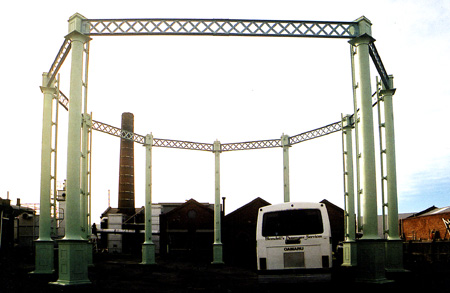
Gasholder of 1879

Andersons Bay Road, DUNEDIN

Private

Historic Place Category 1

List No. 4398

Quick links:
List GalleryLocationDetails
Gasholder of 1879, Dunedin Gasworks | Derek Smith | 10/06/2002 | Heritage New Zealand
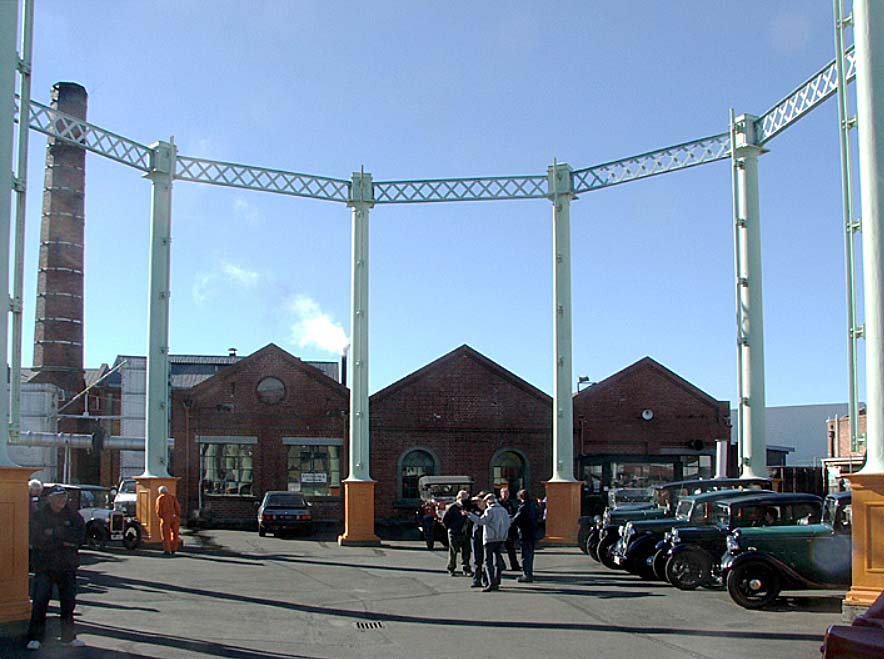
Gasholder of 1879, Dunedin Gasworks. Image courtesy of commons.wikimedia.org | James Dignan | 03/05/2009 | James Dignan
Gasholder of 1879, Dunedin Gasworks | Derek Smith | 10/06/2002 | Heritage New Zealand
Gasholder of 1879, Dunedin Gasworks. Image courtesy of commons.wikimedia.org | James Dignan | 03/05/2009 | James Dignan

List Entry Information

Overview

Status
Listed

List Entry Status
Historic Place Category 1

Access
Private/No Public Access

List Number
4398

Date Entered
24th March 1988

Date of Effect
24th March 1988

City/District Council
Dunedin City

Region
Otago Region

Legal description

Lot 6 DP 21969

Detailed List Entry
Significance

Historic Significance

Historical Significance or Value This is the oldest existing gasholder in the Dunedin Gasworks, which was the first gasworks in the country to produce gas, opening in 1863. Presumably there was once an even older gasholder. The works were owned initially by the Dunedin Gaslight and Coke Company, operating under its manager and engineer, Stephen Stamp Hutchinson. After agitation from the customers, the works were bought by the Dunedin City Corporation in 1876. Upgrading of the works was badly needed and a new gasholder was installed in 1881 according to contemporary records (even though the holder has 1879 engraved on it). Hutchinson did build a rival gasworks at Caversham and had a contract to supply Caversham, Mornington, Roslyn and Maori Hill. This contract expired in 1907 and the city took over the Caversham works which have now been demolished.

Physical Significance

Architectural Significance: The holder is part of the important Victorian industrial complex of the gasworks. Townscape/Landmark Significance: Though this is the smaller of the two gasholders on Andersons Bay Road, it is an important entity in the gasworks complex.

Construction Details

Start Year

1879

Type

Original Construction

Construction Materials

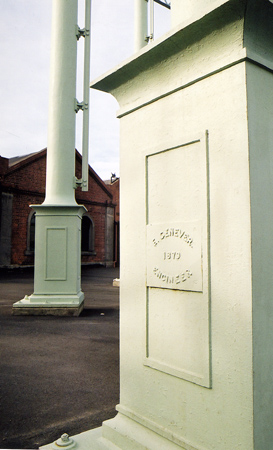
The gas bag is held up by round metal pillars set on square corniced and panelled bases. These in turn sit on low brick platforms. The pillars rise to lightly decorated square tops which support a ring of criss-cross lattice work to which the top of the bag is attached, The pillars are about 40 feet high and the bag sits in a basal ring of riveted plates about seven feet high. The holder is still in use.

Notable Features

The age of the structure.

Physical Description

Architect/Engineer/Designer: The names 'E Genever' and 'Horseley Co Ltd, Tipley, Staffordshire, England' are engraved alternately on all the uprights of the holder. Significance of Architect/Engineer/ Designer: E Genever was the manager of the gas works from 1876 to 1882 when he was dismissed under a cloud. He had been dismissed previously in 1878 but re-appointed after the post was advertised. He had, however, made enemies among the councillors. In July 1882 he was accused of letting tar run to waste, resulting in a summons for causing a nuisance, and of buying dross instead of good coal, with hints of graver misdemeanours. He was given three months notice in July 1882 but presented in November with 100 guineas subscribed by a 'number of gentlemen'. Somehow in the course of this fracas he ordered a gasholder with his name in bas relief lettering on alternate pillars, which must have angered his opponents. Architectural Description (Style): A simple industrial structure with lightly decorated metal castings. Modifications: Apparently none.

Reference

Report Written By

This historic place was registered under the Historic Places Act 1980. This report includes the text from the original Building Classification Committee report considered by the NZHPT Board at the time of registration. Please note that entry on the New Zealand Heritage List/Rarangi Korero identifies only the heritage values of the property concerned, and should not be construed as advice on the state of the property, or as a comment of its soundness or safety, including in regard to earthquake risk, safety in the event of fire, or insanitary conditions.

Further Information

Current Usages

Former Usages

Themes

Web Links

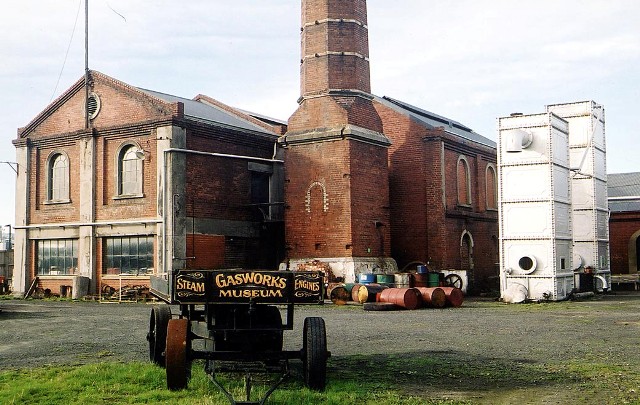
description: Dunedin Gasworks Museum

url: https://www.gasworksmuseum.org.nz

description: Engineering NZ Heritage

url: https://www.engineeringnz.org/our-work/heritage/heritage-register/dunedin-gasworks/
Overview

Status

Listed

List Entry Status

Historic Place Category 1

Access

Private/No Public Access

List Number

4398

Date Entered

24th March 1988

Date of Effect

24th March 1988

City/District Council

Dunedin City

Region

Otago Region

Legal description

Lot 6 DP 21969

Status

Listed

List Entry Status

Historic Place Category 1

Access

Private/No Public Access

List Number

4398

Date Entered

24th March 1988

Date of Effect

24th March 1988

City/District Council

Dunedin City

Region

Otago Region

Legal description

Lot 6 DP 21969

Significance

Why is this place significant?

Historic Significance

Historical Significance or Value This is the oldest existing gasholder in the Dunedin Gasworks, which was the first gasworks in the country to produce gas, opening in 1863. Presumably there was once an even older gasholder. The works were owned initially by the Dunedin Gaslight and Coke Company, operating under its manager and engineer, Stephen Stamp Hutchinson. After agitation from the customers, the works were bought by the Dunedin City Corporation in 1876. Upgrading of the works was badly needed and a new gasholder was installed in 1881 according to contemporary records (even though the holder has 1879 engraved on it). Hutchinson did build a rival gasworks at Caversham and had a contract to supply Caversham, Mornington, Roslyn and Maori Hill. This contract expired in 1907 and the city took over the Caversham works which have now been demolished.

Physical Significance

Architectural Significance: The holder is part of the important Victorian industrial complex of the gasworks. Townscape/Landmark Significance: Though this is the smaller of the two gasholders on Andersons Bay Road, it is an important entity in the gasworks complex.

Why is this place significant?

Historic Significance

Historical Significance or Value This is the oldest existing gasholder in the Dunedin Gasworks, which was the first gasworks in the country to produce gas, opening in 1863. Presumably there was once an even older gasholder. The works were owned initially by the Dunedin Gaslight and Coke Company, operating under its manager and engineer, Stephen Stamp Hutchinson. After agitation from the customers, the works were bought by the Dunedin City Corporation in 1876. Upgrading of the works was badly needed and a new gasholder was installed in 1881 according to contemporary records (even though the holder has 1879 engraved on it). Hutchinson did build a rival gasworks at Caversham and had a contract to supply Caversham, Mornington, Roslyn and Maori Hill. This contract expired in 1907 and the city took over the Caversham works which have now been demolished.

Physical Significance

Architectural Significance: The holder is part of the important Victorian industrial complex of the gasworks. Townscape/Landmark Significance: Though this is the smaller of the two gasholders on Andersons Bay Road, it is an important entity in the gasworks complex.

Construction Information

Construction Details

Start Year

1879

Type

Original Construction

Construction Materials

The gas bag is held up by round metal pillars set on square corniced and panelled bases. These in turn sit on low brick platforms. The pillars rise to lightly decorated square tops which support a ring of criss-cross lattice work to which the top of the bag is attached, The pillars are about 40 feet high and the bag sits in a basal ring of riveted plates about seven feet high. The holder is still in use.

Notable Features

The age of the structure.

Construction Details

Start Year

1879

Type

Original Construction

Construction Materials

The gas bag is held up by round metal pillars set on square corniced and panelled bases. These in turn sit on low brick platforms. The pillars rise to lightly decorated square tops which support a ring of criss-cross lattice work to which the top of the bag is attached, The pillars are about 40 feet high and the bag sits in a basal ring of riveted plates about seven feet high. The holder is still in use.

Notable Features

The age of the structure.

Physical Description

Architect/Engineer/Designer: The names 'E Genever' and 'Horseley Co Ltd, Tipley, Staffordshire, England' are engraved alternately on all the uprights of the holder. Significance of Architect/Engineer/ Designer: E Genever was the manager of the gas works from 1876 to 1882 when he was dismissed under a cloud. He had been dismissed previously in 1878 but re-appointed after the post was advertised. He had, however, made enemies among the councillors. In July 1882 he was accused of letting tar run to waste, resulting in a summons for causing a nuisance, and of buying dross instead of good coal, with hints of graver misdemeanours. He was given three months notice in July 1882 but presented in November with 100 guineas subscribed by a 'number of gentlemen'. Somehow in the course of this fracas he ordered a gasholder with his name in bas relief lettering on alternate pillars, which must have angered his opponents. Architectural Description (Style): A simple industrial structure with lightly decorated metal castings. Modifications: Apparently none.

Architect/Engineer/Designer: The names 'E Genever' and 'Horseley Co Ltd, Tipley, Staffordshire, England' are engraved alternately on all the uprights of the holder. Significance of Architect/Engineer/ Designer: E Genever was the manager of the gas works from 1876 to 1882 when he was dismissed under a cloud. He had been dismissed previously in 1878 but re-appointed after the post was advertised. He had, however, made enemies among the councillors. In July 1882 he was accused of letting tar run to waste, resulting in a summons for causing a nuisance, and of buying dross instead of good coal, with hints of graver misdemeanours. He was given three months notice in July 1882 but presented in November with 100 guineas subscribed by a 'number of gentlemen'. Somehow in the course of this fracas he ordered a gasholder with his name in bas relief lettering on alternate pillars, which must have angered his opponents. Architectural Description (Style): A simple industrial structure with lightly decorated metal castings. Modifications: Apparently none.

Reference

Historical and Associated Iwi / Hapū / Whānau

Other Information

This historic place was registered under the Historic Places Act 1980. This report includes the text from the original Building Classification Committee report considered by the NZHPT Board at the time of registration. Please note that entry on the New Zealand Heritage List/Rarangi Korero identifies only the heritage values of the property concerned, and should not be construed as advice on the state of the property, or as a comment of its soundness or safety, including in regard to earthquake risk, safety in the event of fire, or insanitary conditions.

Historical and Associated Iwi / Hapū / Whānau

Other Information

This historic place was registered under the Historic Places Act 1980. This report includes the text from the original Building Classification Committee report considered by the NZHPT Board at the time of registration. Please note that entry on the New Zealand Heritage List/Rarangi Korero identifies only the heritage values of the property concerned, and should not be construed as advice on the state of the property, or as a comment of its soundness or safety, including in regard to earthquake risk, safety in the event of fire, or insanitary conditions.

Further Information

Web Links

description: Dunedin Gasworks Museum

url: https://www.gasworksmuseum.org.nz

description: Engineering NZ Heritage

url: https://www.engineeringnz.org/our-work/heritage/heritage-register/dunedin-gasworks/
Web Links

description: Dunedin Gasworks Museum

url: https://www.gasworksmuseum.org.nz

description: Engineering NZ Heritage

url: https://www.engineeringnz.org/our-work/heritage/heritage-register/dunedin-gasworks/

Location

Loading
Related listings
Fitting Shop (Smithy or Purifier House)
Dunedin Gasworks Exhauster and Boiler House
Fitting Shop (Smithy or Purifier House)
Stay up to date with Heritage this month